Isles of Noise: Sonic Media in the Caribbean by Alejandra Bronfman
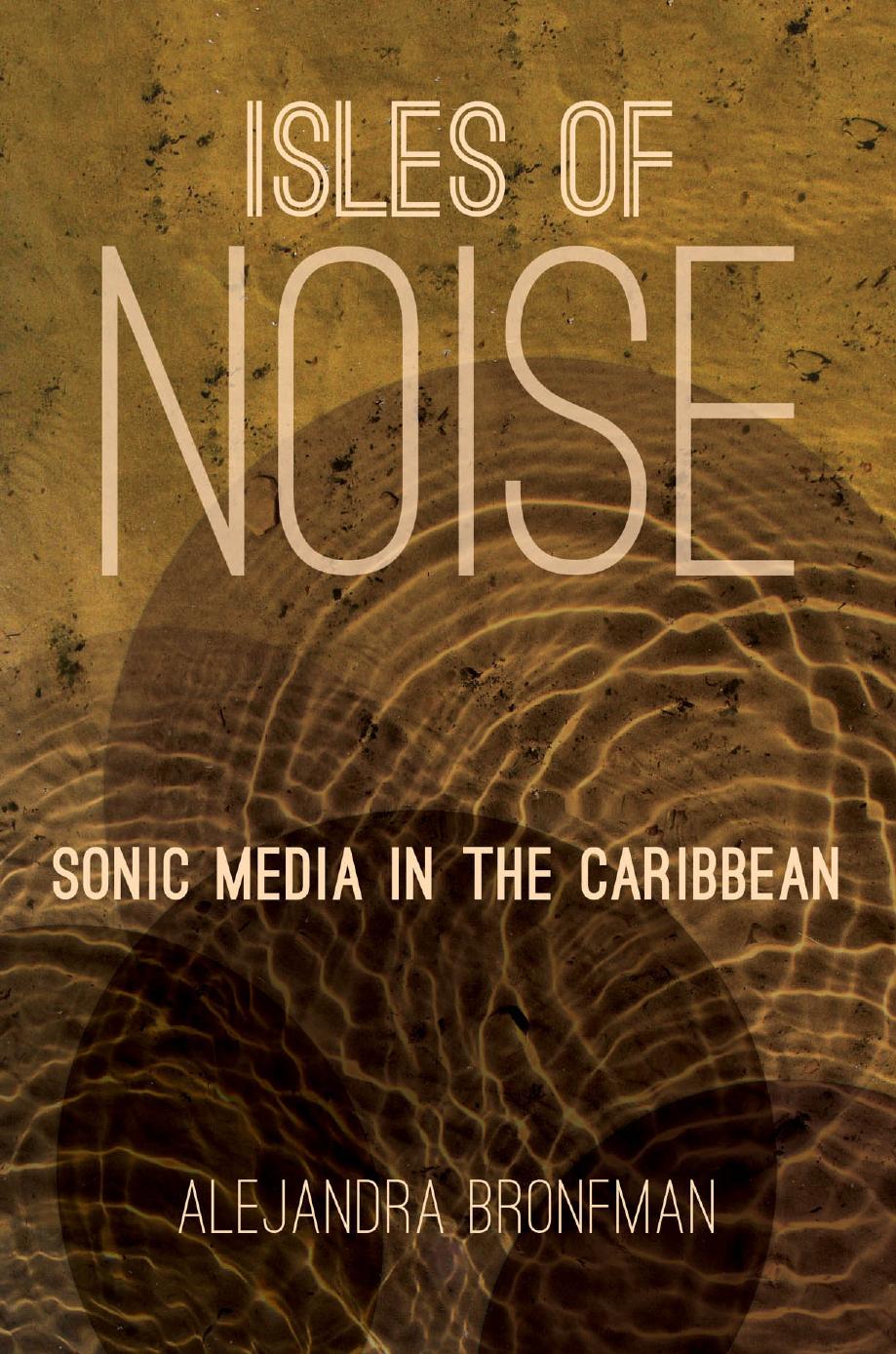
Author:Alejandra Bronfman [Bronfman, Alejandra]
Language: eng
Format: epub, pdf
Tags: History, Caribbean & West Indies, General
ISBN: 9781469628691
Google: uN8MjwEACAAJ
Publisher: University of North Carolina Press
Published: 2016-07-15T20:27:24.644514+00:00
Tumults of Eloquence and Polyglot Radios
Language became a focal point in political battles in Haiti after Dumarsais Estiméâs election in 1946. A revolt against Elie Lescotâs U.S.-supported government and a turn to more radical politics had brought Estimé to power. With origins and upbringing in the black peasantry, Estimé supported the black middle class and the labor movement against the mulatto elite, and in so doing altered political soundscapes.83 As in Cuba in the 1930s, radio had participated in mobilizations surrounding Lescotâs departure. An HH3W broadcast announcing his resignation and flight incited widespread celebration and looting. In an effort to control the disorder, some of the rioters also took to the radio and called for a return to peaceful routines of daily life.84 In keeping with efforts to integrate workers into Estiméâs political project, the radical student founders of La Ruche took issues of the journal into popular neighborhoods and read the Kreyòl articles out loud.85
The voice of Daniel Fignolé bolstered sonic and politicized blackness. A union activist, Fignolé had long reached out to and sought to incorporate Haitian workers and peasants into national politics. He voiced a radically democratizing and noiriste stance that drove a massive unionization effort. As president of the Mouvement Ouvrier Paysan, founded in 1945, he incorporated the employees of the Haitian American Sugar Company (HASCO) as well as those of the Bata shoe factory and other urban workers such as dockworkers and barbers. Matthew Smith has noted that Fignolé led âthe most organized labor party in Haitian history and the largest mass organization in the pre-Duvalier eraâ with devotion and charisma.86 Appealing to Haitians in the language most of them spoke remained a priority. Much of Fignoléâs success resulted from his abilities as a fiery public speaker who used the radio as often as possible. Fignolé seems to have been comfortable slipping between French and Kreyòl and had an uncanny knack for the appropriate time to switch from one to the other.87 His biographer, Carlo Désinor, describes the allure of his voice on the radio: âIt menaces. It charms. The people, like duped infants, absorb this new evangelist and his tumult of eloquence that makes them see another vision of the world, of themselves, and of the future.â88 Fignoléâs magnetism derived from his use of language. âDanielâs Creole was as good as his French,â notes Désinor. âOn his lips, our vernacular is a creative laboratory, a source of inexhaustible spirit.â89 If Languichatte and Frère Hiss had relied on humor and education to introduce Kreyòl to radio in acceptable ways, Daniel Fignolé radicalized Kreyòl-speaking radio in his efforts to mobilize large segments of the working population. With his savvy use of both Kreyòl and media, Fignolé generated a politics of sound as part of a broader politics of the popular. More so than Duvalier, who is often credited with strategies of populist appeal but who abandoned them after his election in 1957, Fignolé etched out a particular kind of blackness that included mediated sonic blackness as well.
Download
Isles of Noise: Sonic Media in the Caribbean by Alejandra Bronfman.pdf
This site does not store any files on its server. We only index and link to content provided by other sites. Please contact the content providers to delete copyright contents if any and email us, we'll remove relevant links or contents immediately.
The Vikings: Conquering England, France, and Ireland by Wernick Robert(84576)
Ali Pasha, Lion of Ioannina by Eugenia Russell & Eugenia Russell(40380)
The Conquerors (The Winning of America Series Book 3) by Eckert Allan W(39020)
The Vikings: Discoverers of a New World by Wernick Robert(37047)
Cecilia; Or, Memoirs of an Heiress — Volume 1 by Fanny Burney(32716)
Cecilia; Or, Memoirs of an Heiress — Volume 2 by Fanny Burney(32083)
Cecilia; Or, Memoirs of an Heiress — Volume 3 by Fanny Burney(32063)
Empire of the Sikhs by Patwant Singh(23199)
The Secret History by Donna Tartt(19462)
Hans Sturm: A Soldier's Odyssey on the Eastern Front by Gordon Williamson(18722)
Cat's cradle by Kurt Vonnegut(15549)
Pimp by Iceberg Slim(14785)
Sapiens: A Brief History of Humankind by Yuval Noah Harari(14552)
Norse Mythology by Gaiman Neil(13562)
Talking to Strangers by Malcolm Gladwell(13534)
Leonardo da Vinci by Walter Isaacson(13505)
4 3 2 1: A Novel by Paul Auster(12609)
Underground: A Human History of the Worlds Beneath Our Feet by Will Hunt(12224)
The Radium Girls by Kate Moore(12177)
